
For many hockey fans, going to a game is simply part of being a supporter of the sport. For the Black Girl Hockey Club, however, the experience of attending a hockey game became the starting point for something much larger. What began as an online conversation among Black women who shared an interest in hockey developed into a North American nonprofit organization with programs focused on community, access, mentorship and inclusion.
The Black Girl Hockey Club was founded in 2018 by Renee Hess. Its original idea was straightforward: create a space where Black women could enjoy hockey together and feel comfortable being part of the wider hockey community. Over time, the organization expanded beyond game-day gatherings and began working on initiatives connected with young players, professional development and the culture surrounding the sport.
How Black Girl Hockey Club Began
The story started with Hess’s own experience as a hockey fan. Originally from California, she became interested in the sport as an adult and developed a particular connection with the Pittsburgh Penguins. After attending hockey games, she noticed how few Black women she encountered in the stands.
That observation led her to look online for other Black women who followed hockey. In 2018, those conversations became the Black Girl Hockey Club. What initially existed as a group chat quickly developed into something that could bring fans together in person.
The first major gathering took place at a Washington Capitals game in December 2018. More than 40 people attended the event, including hockey fans, families and supporters. The group also had an opportunity to meet people connected with the game. The event demonstrated that the online community could translate into a real-world network of hockey fans.
The growth was remarkably quick. By March 2019, NHL.com reported that the group had more than 200 members and had organized gatherings in several NHL cities. Around the same time, Hess began the process of turning the organization into a nonprofit.
Supporting Young Hockey Players
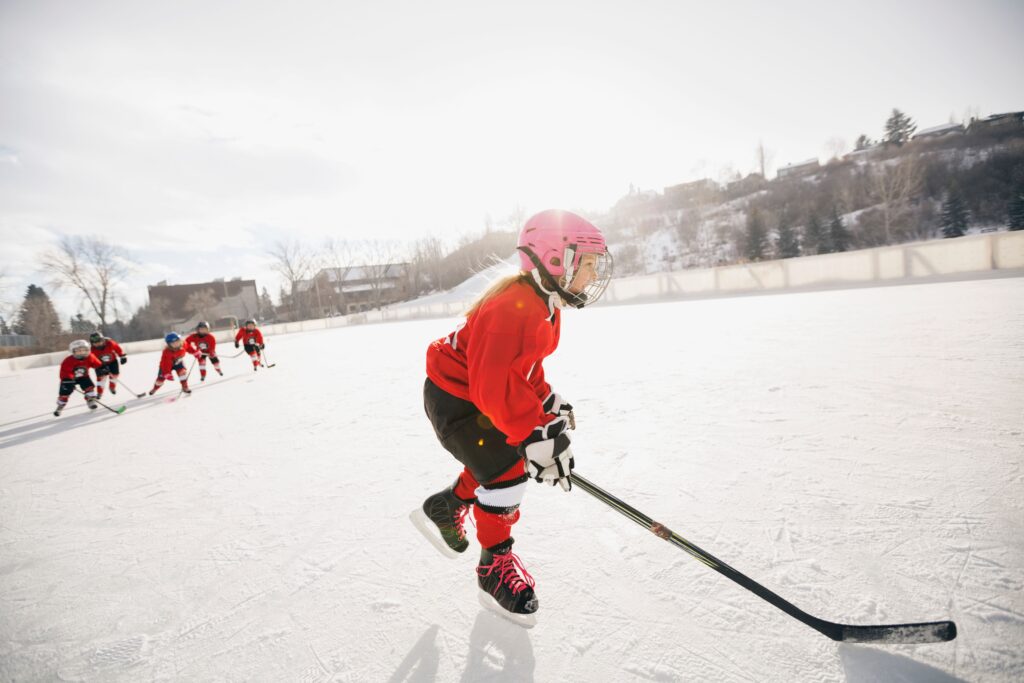
The cost of playing hockey can be significant. Equipment, ice time, travel, registration and other expenses can create obstacles for young players and their families. In January 2019, Black Girl Hockey Club organized a fundraising effort for Kalei Forga, a 12-year-old player from Minnesota who needed financial support to participate in the World Selects Invitational in France. The campaign became one of the organization’s early examples of direct support for a young Black hockey player. The following year, the organization announced its first scholarship program. The initiative was designed to help subsidize hockey expenses for Black girls between the ages of 9 and 18.
Scholarships changed the organization’s role in the hockey community. It was also becoming a mechanism through which young players could receive practical assistance in continuing with the sport. The idea fits into a broader understanding of access to hockey. Interest alone does not guarantee participation. Financial circumstances, availability of programs and the cost of equipment and training can all influence whether a young player is able to remain involved.
The Place of Black Girl Hockey Club in Modern Hockey
 Black Girl Hockey Club represents one example of how a sports community can develop outside the traditional structures of teams and leagues. Its starting point was fandom, but its work gradually expanded into scholarships, mentorship, organized events and discussions about access and representation.
The history of the organization also shows how digital communities can lead to offline connections. A group that initially existed through online conversations eventually brought people together in arenas, supported young players and established programs for adults interested in hockey careers.
Since its founding in 2018, Black Girl Hockey Club has continued to develop around that basic idea: creating opportunities for Black women and the wider Black community to have a visible and active place within hockey. The organization’s evolution from a small online group into a nonprofit with scholarships, mentorship and community initiatives has made its history closely connected with the wider conversation about access and inclusion in ice hockey.